Studying part-time | GoVersity

Christine Stamatis
Founder & Managing Director
17. Januar 2022
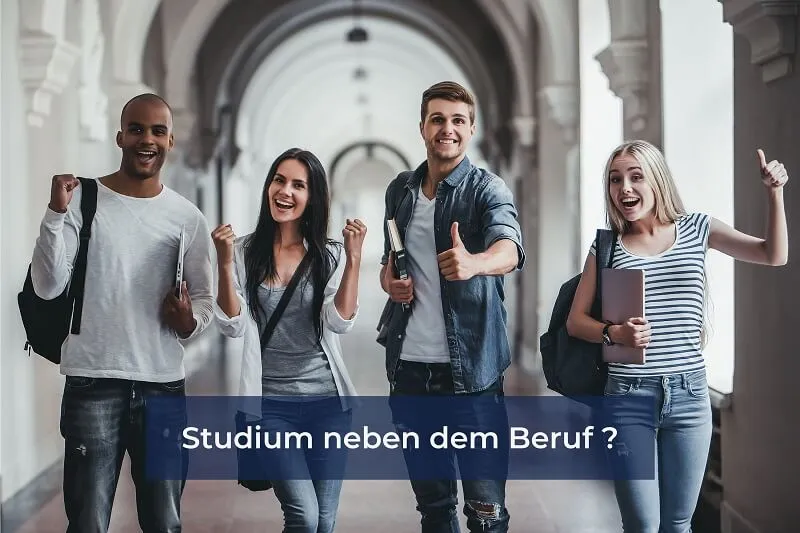
“After I finish school, I want to work first and then maybe go to university” or “After my Bachelor’s degree, I want to earn money first and then maybe do a Master’s degree later” – this or something similar is what many young people think.
Why not combine work and study at the same time?
The one does not exclude the other. This is easily possible with a part-time degree course.
**What does part-time study mean?
With a part-time degree course, you have the opportunity to study alongside your job as a working person. The course is organized in such a way that it can be easily combined with a full-time job. There are also part-time degree programs where you have an extended standard period of study, but you have to achieve the same grades as full-time students.
A part-time degree course does not require a connection between work and study, but the content of the professional activity is often taken into account, e.g. in project work or presentations.
**What types of part-time study are there?
The most common types of part-time study are:
- Block study
- Part-time study
- Evening studies
- Distance learning
- Weekend studies
**Block study
In block courses, you attend classes once or several times per semester for several days at a time. You need to reserve a few vacation days for these blocks. This is followed by longer self-study phases.
**Part-time study program
If you are unable to study full-time for professional, financial or personal reasons, you have the option of studying part-time. Here you only have to complete half of the planned coursework per semester, but in return your standard period of study is often extended. However, there are also models that can be carried out without wasting time due to their compactness. These include, for example, the part-time Master in Business Administration or MBA General Management in Karlsruhe. You can complete a part-time degree course either as a dual study program or completely part-time.
Evening studies
When studying in the evening, you attend lectures after your regular working hours once or twice a week in the evening or occasionally at the weekend. The proportion of attendance is usually relatively high and you have to spend less time at home on self-study.
Studying part-time via distance learning
With distance learning, you receive the course content independently of the lecturer in terms of time and location. You learn the subject matter largely through self-study via digital learning platforms. Only examinations can sometimes take place in person, depending on the university.
Weekend studies
With this part-time degree program, you work full-time in your job during the week and study on selected weekends by attending the relevant courses on site. Some universities also offer a hybrid version where you are taught certain content via blended learning concepts.
**Professional and personal development
Regardless of which of these models you choose, you will definitely develop yourself further, because with a part-time degree you will climb to the next level on your career ladder without having to forego the financial background of your job. This allows you to build up your professional network at the same time, giving you a competitive edge on the job market.
Of course, a part-time degree course, like any other degree course, always requires a high degree of good self-management and time management. But by exchanging ideas with your fellow students, you have people at your side who are pursuing the same goal as you. In addition, your lecturers will not leave you alone on your path, but will accompany you step by step until you graduate.
_Are you interested in a future-oriented, career-oriented course of study? Find out more about the study concept at GoVersity in Karlsruhe.
https://www.goversity.de/wp-content/uploads/2022/01/Studiere-berufsbegleitend.jpg 533 800 Natalie Dechant https://www.goversity.de/wp-content/uploads/2019/03/goversity-logo-header.png Natalie Dechant2022-01-17 14:14:252024-01-14 21:37:21Studying part-time – next level on the career ladder
Kontakt
GoVersity GmbH
Verwaltung:
Im Zeitvogel 2
76227 Karlsruhe
Campus Karlsruhe
Durlacher Allee 56
76131 Karlsruhe
Tel.: +49 721 619 301 90
study@goversity.de
Individuelle Beratung und Bewerbung
Bei unseren Online-Info-Sessions kannst Du Dir in 30 Minuten persönlich ein Bild von den Angeboten der GoVersity machen und uns kennenlernen.
Du kannst Dich auch direkt für ein Bachelor- oder Master-Studium bewerben.
Sitemap
- Home page
- Bachelor
- Master
- Study concept
- Events
- Blog
- Contact & Community
- Info Session
- Application
- Study Navigator | GoVersity
- Doctorate PHD
- PhD Application
- Request our Tech Brochure
- PhD Doctoral Lounge
Bleib inspiriert mit Go-News
Mit unserem Newsletter (1x im Monat) halten wir Dich immer dem Laufenden
Link to: 8 tips on how to overcome writer’s block Link to: 8 tips on how to overcome writer’s block 8 tips on how to overcome writer’s blockLink to: Study on the weekend – work during the week Link to: Study on the weekend – work during the week Study on the weekend – work during the week
Scroll to top Scroll to top Scroll to top
We are using cookies to give you the best experience on our website.
You can find out more about which cookies we are using or switch them off in settings.
Accept Settings
Change cookie settings
Close GDPR Cookie Settings
- Privacy Overview
- Strictly Necessary Cookies
- Analytics
- Marketing
- Cookie Policy
Privacy Overview
This website uses cookies so that we can provide you with the best user experience possible. Cookie information is stored in your browser and performs functions such as recognising you when you return to our website and helping our team to understand which sections of the website you find most interesting and useful.
Strictly Necessary Cookies
Strictly Necessary Cookie should be enabled at all times so that we can save your preferences for cookie settings.
Enable or Disable Cookies Enabled Disabled
Analytics
This website uses Google Analytics to collect anonymous information such as the number of visitors to the site, and the most popular pages.
Keeping this cookie enabled helps us to improve our website.
Enable or Disable Cookies Enabled Disabled
Marketing
This website uses the following additional cookies:
(List the cookies that you are using on the website here.)
Enable or Disable Cookies Enabled Disabled
Cookie Policy
More information about our Cookie Policy
Enable All Save Settings
{"@context":"https://schema.org","@graph":[{"@type":"Article","@id":"https://www.goversity.de/en/blog/studying-part-time-next-level-on-the-career-ladder/#article","isPartOf":{"@id":"https://www.goversity.de/en/blog/studying-part-time-next-level-on-the-career-ladder/"},"author":{"name":"Natalie Dechant","@id":"https://www.goversity.de/en/#/schema/person/d3a70b38b6fbc9298c59f0c64f2535f4"},"headline":"Studying part-time – next level on the career ladder","datePublished":"2022-01-17T13:14:25+00:00","dateModified":"2024-01-14T20:37:21+00:00","mainEntityOfPage":{"@id":"https://www.goversity.de/en/blog/studying-part-time-next-level-on-the-career-ladder/"},"wordCount":630,"publisher":{"@id":"https://www.goversity.de/en/#organization"},"image":{"@id":"https://www.goversity.de/en/blog/studying-part-time-next-level-on-the-career-ladder/#primaryimage"},"thumbnailUrl":"https://www.goversity.de/wp-content/uploads/2022/01/Studiere-berufsbegleitend.jpg","inLanguage":"en-US"},{"@type":"WebPage","@id":"https://www.goversity.de/en/blog/studying-part-time-next-level-on-the-career-ladder/","url":"https://www.goversity.de/en/blog/studying-part-time-next-level-on-the-career-ladder/","name":"Studying part-time | GoVersity","isPartOf":{"@id":"https://www.goversity.de/en/#website"},"primaryImageOfPage":{"@id":"https://www.goversity.de/en/blog/studying-part-time-next-level-on-the-career-ladder/#primaryimage"},"image":{"@id":"https://www.goversity.de/en/blog/studying-part-time-next-level-on-the-career-ladder/#primaryimage"},"thumbnailUrl":"https://www.goversity.de/wp-content/uploads/2022/01/Studiere-berufsbegleitend.jpg","datePublished":"2022-01-17T13:14:25+00:00","dateModified":"2024-01-14T20:37:21+00:00","description":"Studying while working ✓ Types of part-time study ✓ Opportunities for further development ► More information at GoVersity","breadcrumb":{"@id":"https://www.goversity.de/en/blog/studying-part-time-next-level-on-the-career-ladder/#breadcrumb"},"inLanguage":"en-US","potentialAction":[{"@type":"ReadAction","target":["https://www.goversity.de/en/blog/studying-part-time-next-level-on-the-career-ladder/"]}]},{"@type":"ImageObject","inLanguage":"en-US","@id":"https://www.goversity.de/en/blog/studying-part-time-next-level-on-the-career-ladder/#primaryimage","url":"https://www.goversity.de/wp-content/uploads/2022/01/Studiere-berufsbegleitend.jpg","contentUrl":"https://www.goversity.de/wp-content/uploads/2022/01/Studiere-berufsbegleitend.jpg","width":800,"height":533,"caption":"Studiere berufsbegleitend"},{"@type":"BreadcrumbList","@id":"https://www.goversity.de/en/blog/studying-part-time-next-level-on-the-career-ladder/#breadcrumb","itemListElement":[{"@type":"ListItem","position":1,"name":"Startseite","item":"https://www.goversity.de/en/home-page/"},{"@type":"ListItem","position":2,"name":"Studying part-time – next level on the career ladder"}]},{"@type":"WebSite","@id":"https://www.goversity.de/en/#website","url":"https://www.goversity.de/en/","name":"GoVersity","description":"Bachelor-Studium, Master-Studium, Promotion","publisher":{"@id":"https://www.goversity.de/en/#organization"},"potentialAction":[{"@type":"SearchAction","target":{"@type":"EntryPoint","urlTemplate":"https://www.goversity.de/en/?s={search_term_string}"},"query-input":{"@type":"PropertyValueSpecification","valueRequired":true,"valueName":"search_term_string"}}],"inLanguage":"en-US"},{"@type":"Organization","@id":"https://www.goversity.de/en/#organization","name":"GoVersity","url":"https://www.goversity.de/en/","logo":{"@type":"ImageObject","inLanguage":"en-US","@id":"https://www.goversity.de/en/#/schema/logo/image/","url":"https://www.goversity.de/wp-content/uploads/2019/03/goversity-logo-header.png","contentUrl":"https://www.goversity.de/wp-content/uploads/2019/03/goversity-logo-header.png","width":400,"height":175,"caption":"GoVersity"},"image":{"@id":"https://www.goversity.de/en/#/schema/logo/image/"},"sameAs":["https://www.facebook.com/GoVersitySteinbeis","https://www.instagram.com/goversity.steinbeis"]},{"@type":"Person","@id":"https://www.goversity.de/en/#/schema/person/d3a70b38b6fbc9298c59f0c64f2535f4","name":"Natalie Dechant","image":{"@type":"ImageObject","inLanguage":"en-US","@id":"https://www.goversity.de/en/#/schema/person/image/","url":"https://secure.gravatar.com/avatar/46d809103b1d0f92e333a61c55c0d5b1587926d7d0ac1a92c413cd4fe3ae6e44?s=96&d=mm&r=g","contentUrl":"https://secure.gravatar.com/avatar/46d809103b1d0f92e333a61c55c0d5b1587926d7d0ac1a92c413cd4fe3ae6e44?s=96&d=mm&r=g","caption":"Natalie Dechant"},"description":"Natalie ist zertifizierter Business-Coach, Dozentin und u.a. Expertin für wissenschaftliches Arbeiten.","url":"https://www.goversity.de/en/blog/author/dechant/"}]}
{
    "@context": "https://schema.org",
    "@type": "LocalBusiness",
    "@id": "https://www.goversity.de/en/",
    "image": "https://www.goversity.de/wp-content/uploads/2019/03/goversity-logo-header.png",
    "priceRange": "$$",
    "telephone": "+49 721 619 301 90",
    "name": "GoVersity",
    "logo": "https://www.goversity.de/wp-content/uploads/2019/03/goversity-logo-header.png",
    "description": "GoVersity bietet mit einem exklusiven akademischen Netzwerk, berufsbegleitende Bachelor, Master/MBA -Studienprogramme an. Diese zeichnen sich durch hohe Praxisorientierung, ein flexibles Studienkonzept und individuelle Karrieref\u00f6rderung aus. Das ist, dass 360-Grad GoVersity Konzept. Hochqualifizierte Dozenten aus der Unternehmenspraxis vermitteln moderne Studieninhalte, die eine langfristige berufliche Perspektive und Sicherheit verfolgen. Alle Programme sind akkreditiert und staatlich anerkannt. Sie umfassen u.a. die Bereiche Betriebswirtschaftslehre (BWL), Management, Wirtschaftspsychologie, Marketing mit dem akademischen Abschluss Bachelor of Arts (B.A.), Master of Arts (M.A.)/ Master of Business Administration (MBA).",
    "openingHours": [
        "Mo-Fr 09:00-20:00",
        "Sa 10:00-20:00"
    ],
    "geo": {
        "@type": "GeoCoordinates",
        "latitude": null,
        "longitude": null
    },
    "url": "https://www.goversity.de",
    "contactPoint": {
        "@type": "ContactPoint",
        "telephone": "+49 721 619 301 90",
        "contactType": "customer service",
        "email": "",
        "contactOption": "",
        "areaServed": "",
        "availableLanguage": null
    },
    "address": {
        "@type": "PostalAddress",
        "addressCountry": "Germany",
        "addressLocality": "Karlsruhe",
        "addressRegion": "Baden-W\u00fcrttemberg",
        "postalCode": "76227",
        "streetAddress": "Im Zeitvogel 2"
    }
}